
By Rahim Marzuki
Indonesia is entering a critical phase in advancing Extended Producer Responsibility (EPR) as part of its transition toward a circular economy. Regulatory frameworks, institutional arrangements, and producer obligations are being strengthened to support a more structured and accountable national system.
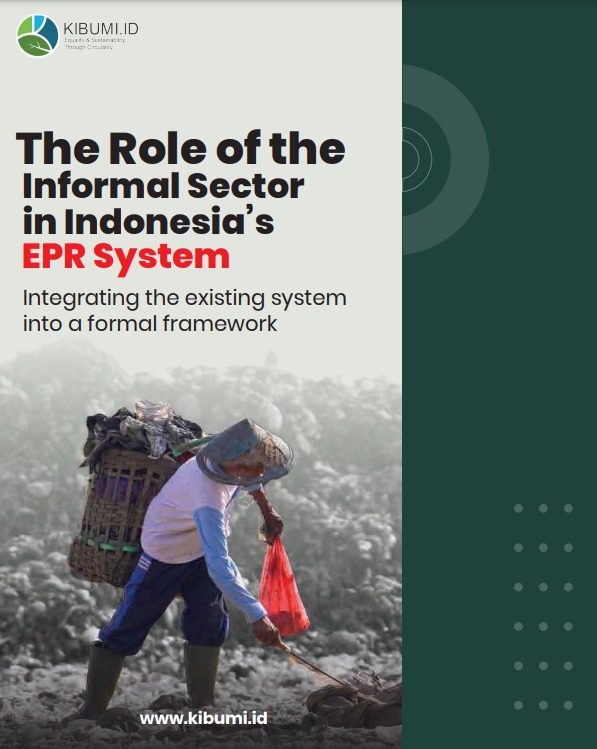
However, beyond these developments, a fundamental aspect requires closer attention. Unlike many countries where waste management systems are largely formalized, Indonesia’s recycling ecosystem has long been driven by the informal sector. Millions of individuals, including waste pickers, aggregators, and small-scale junkshops, play a crucial role in collecting, sorting, and channeling recyclable materials into the recycling industry.
As a result, a significant share of post-consumption waste is already managed through a system that operates beyond formal regulatory oversight. This presents a unique starting point for EPR implementation. Rather than building a system from scratch, Indonesia faces the challenge of integrating an existing, adaptive, and decentralized system into a formal policy framework.
This integration extends beyond technical considerations and involves governance, social inclusion, and institutional design. The absence of clear definitions and mechanisms for informal actors creates gaps in accountability and coordination. Many workers operate without legal recognition, stable income, or access to financial and social protection. The effectiveness of EPR will depend on how well PROs, registration systems, and reporting platforms connect formal and informal actors.
At the same time, risks must be considered. Rigid formalization may disrupt existing networks that are efficient and responsive to market conditions. Conversely, lack of integration may lead to fragmented systems, data gaps, and limited scalability.
Moving forward, EPR in Indonesia should be designed as an inclusive system, recognizing informal actors, enabling gradual integration, and aligning regulation with on-the-ground realities. This includes flexible registration, fair incentives, stronger coordination, and safeguarding livelihoods.
Ultimately, EPR effectiveness will depend not only on regulation, but on how well the system incorporates actors who have sustained material recovery for decades.