By Khusnita Azizah
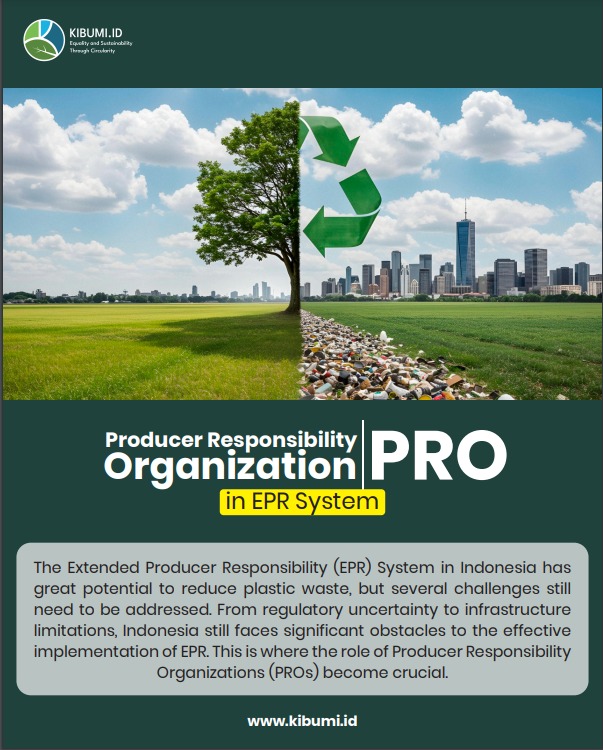
Indonesia has recognized the extended of producer responsibility (EPR) as key to its circular economy agenda, yet its implementation is currently voluntary. This regulation refers to the Minister of Environment and Forestry Regulation No. 75/2019 concerning the Roadmap for Waste Reduction by Producers and governs the formation of Producer Responsibility Organizations (PROs) as well as the roles of the government and industry in the EPR scheme.
However, as of now, only a minority of companies have developed a waste reduction roadmap in accordance with Regulation No. 75/2019. Structural challenges in the implementation of EPR include regulatory uncertainty, weak oversight, gaps in waste management infrastructure, lack of funding, poor data and information systems, and a waste collection system that heavily relies on the unorganized informal sector. Therefore, there is a need for collective entities to facilitate the implementation of EPR, such as PROs. PROs have the potential to address the fragmentation of Indonesia's waste system by centrally managing fees, improving oversight, and fostering structured cooperation among stakeholders.
In Indonesia, there is currently no legal obligation to establish PROs. The government acknowledges the need for PROs but has yet to formulate an official scheme.
The effective PRO model must be tailored to the national context. There is no "one-size-fits-all" approach. With Indonesia's market dominated by MSMEs, a non-profit scheme is considered more appropriate. The organizational structure of PRO could include an advisory board from various ministries and experts (e.g., Coordinating Ministry for Maritime Affairs, Ministry of Environment and Forestry, Industry, etc.), as well as an executive board from producer representatives. Regular certification or independent audits are necessary to ensure PROs comply with EPR regulations and performance reports.
The success of EPR in Indonesia depends on the realization of effective PROs, not just administrative formalities. PROs must be designed and regulated to truly collect industry funds, drive recycling infrastructure, and increase the added value of waste. The key is strong coordination between the government, private sector, and waste management communities, supported by integrated data systems and effective oversight. With clear funding, contextual policy design, and PRO accountability, EPR can drive an effective and circular waste management system in Indonesia.
Let’s push for a game-changing EPR system that drives real, sustainable waste management and propels Indonesia toward a circular economy.